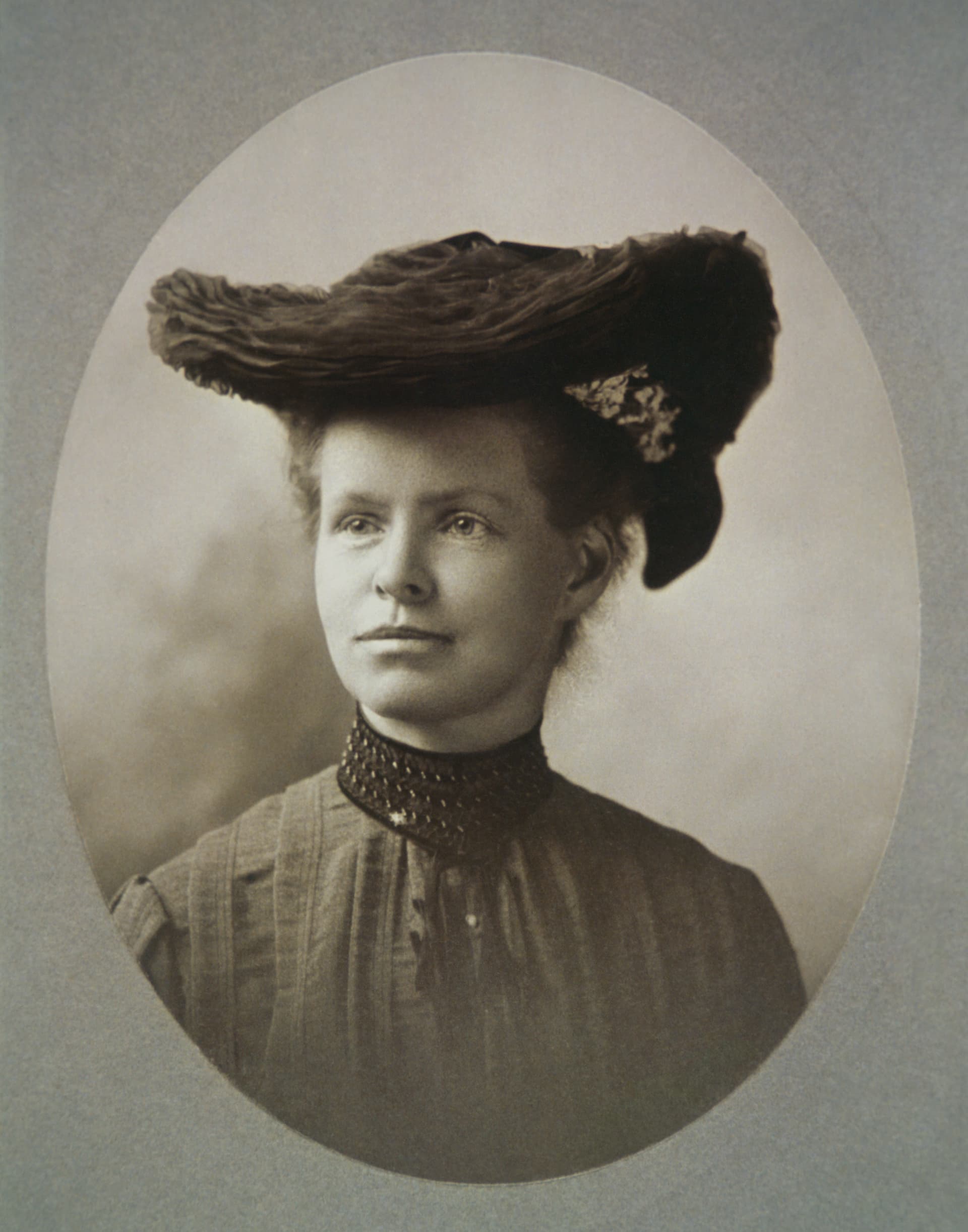
Nettie Maria Stevens
Demonstrated that sex is determined by specific chromosomes (X and Y), providing first strong evidence that heredity - not environment - defines sex in many species.
Nettie Stevens was a pioneering American geneticist. In 1905 she published research showing that in mealworms (and later in other insects), the presence of a small "Y" chromosome - paired with a larger one - determined male sex, while two larger chromosomes produced female offspring. This was the first clear link between chromosomes and sex determination.
Nettie Maria Stevens was born on July 7, 1861, in Cavendish, Vermont. She grew up in a modest family; after early education she attended the State Normal School (now Westfield State College) in Massachusetts. Later, around the age 35, she entered Stanford University, earning a B.A. in 1899 and an M.A. in 1900. She then pursued graduate studies at Bryn Mawr College, receiving her Ph.D. in 1903. After earning her doctorate, Stevens remained at Bryn Mawr as a research fellow, then lecturer, and eventually as associate in experimental morphology. Her early research focused on the morphology and taxonomy of protozoa, but by the early 1900s she turned to cytology and embryology. In 1905, she conducted experiments on the mealworm Tenebrio molitor and discovered that male sperm carried either a large chromosome or a much smaller one - while female eggs carried only the large version. Observing that the offspring sex correlated with which chromosome the sperm carried, she concluded that sex was determined by specific chromosomes. This discovery provided the first firm evidence that heredity - via chromosomes - determines sex, not environment or "temperament." Her 1905-1906 works have been recognized as foundational in cytogenetics and heredity science. Despite her groundbreaking work, Stevens faced the institutional biases common for women scientists at her time: she did not achieve a full professorial chair, but persisted in research. Nettie Stevens died on May 4, 1912 in Baltimore, Maryland, from breast cancer, at age 50. Although her life was short, she published dozens of papers and left a legacy: her work laid the groundwork for modern genetics and cytology, and our understanding of how sex is biologically determined.
Sources
- 1.Biography «Nettie Stevens» on Britannica. Encyclopedia Britannica
- 2.«Nettie Maria Stevens (1861 - 1912)» - Embryo Project Encyclopedia. Embryo Project Encyclopedia
- 3.Article «The contributions of Nettie Stevens to the field of sex chromosome biology» (PubMed). PubMed
- 4.«Nettie Stevens: A Discoverer of Sex Chromosomes» on website і Nature's Scitable / Learn Science. Nature